No. 124 · Hospitality / Field Note
When the Hotel Becomes the Itinerary
A property gains pricing power when leaving becomes optional rather than necessary. The difference is not the number of amenities—it is the quality of the day they create.
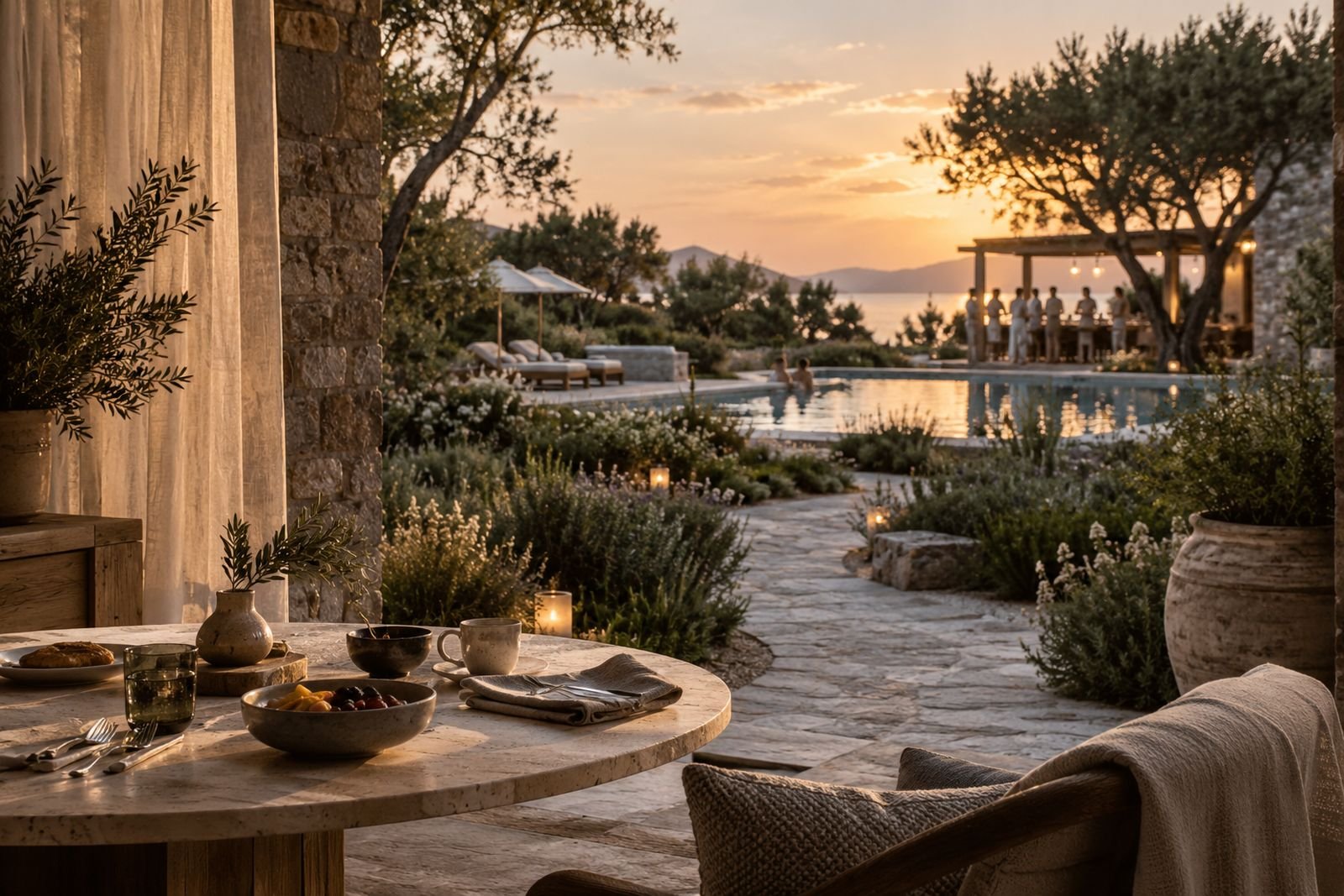
There is a moment in a strong hotel stay when the outside itinerary begins to dissolve. Breakfast extends into the terrace. A swim becomes lunch. Lunch becomes a walk, a treatment, a drink or an event. The guest has not been trapped inside the property. They have stopped needing to leave it.
That distinction matters. Resorts have always attempted to retain guests through facilities. But retention can be defensive: difficult transport, isolated location, bundled consumption or the friction of going elsewhere. A destination hotel retains the guest positively. The next worthwhile thing is already within reach.
The product is the sequence
Hotels often market amenities individually: three restaurants, a spa, pool, gym, gallery, rooftop and club. Guests experience them sequentially. The commercial product is therefore not the inventory of facilities but the transitions between them.
A restaurant that opens after the pool closes, a spa with no same-day availability or a bar that comes alive only after the guest has already left the property produces a broken day. The asset may be abundant while the itinerary remains thin.
The destination hotel is not the one with the most things to do. It is the one that makes the next good decision effortless.
This is why programming matters. A changing calendar can connect fixed spaces into different reasons to stay: a visiting chef, an evening ritual, a guided movement session, a small performance, a studio visit, a market or a conversation. Programming turns capital into time.
Dwell time is a commercial metric
The room rate captures the right to sleep. The rest of the asset competes for the hours around it. A property that holds more of those hours has more opportunities to sell food, beverage, wellness, retail, membership and future stays.
McKinsey sizes the global marketplace for travel experiences as a more than $1 trillion opportunity. Hotels can participate not only by selling third-party activities, but by creating experiences inside spaces they already operate. The challenge is to separate genuine demand creation from amenities guests expect to be free.
Useful operating questions include:
01
Morning
Is there a reason to remain after breakfast?
02
Afternoon
Can the property sustain energy beyond the pool or spa booking?
03
Evening
Would a local choose to be here?
04
Return
Will the programme be meaningfully different next season?
Local demand is the stress test
Travellers can be temporarily captive. Locals are not. When local diners, members and cultural audiences choose the property, they validate that its public spaces have value independent of the room inventory. They also improve the guest experience by making the hotel feel connected to a living place rather than populated only by other visitors.
Local relevance does not require turning every hotel into a nightlife venue. It can come from food, wellness, work, culture or ritual. The point is external demand: someone who does not need a bed still finds a reason to enter.
The line between ease and enclosure
A hotel that becomes the itinerary can also become a bubble. If every experience is owned, sanitised and disconnected from the surrounding community, convenience begins to flatten the destination. That may still sell, but it weakens the cultural value the property claims to offer.
The stronger model uses the hotel as a base and translator. Some experiences belong inside because control is essential. Others should lead outward through trusted partnerships. The guest keeps the ease of curation while the destination retains more of the economic benefit.
The Leisure Economy View
How to put this to work.
The operating test
Map the guest’s day in two-hour blocks. Identify where the property loses them, why they leave and whether the answer should be a new product, better programming or a local partnership.
The commercial test
Measure dwell time alongside ancillary spend and satisfaction. More time is valuable only when the guest experiences it as freedom rather than capture.
Sources and methodology
Disclosure: the author holds a commercial marketing role within the branded resort sector, including in Mexico. No sponsor, partner or commercial relationship influenced this piece. Every figure cited is drawn from public statements, official statistics or freely published research; no employer, subscription or otherwise non-public data was used. See our sponsorship disclosure.