No. 118 · Commercial Hospitality / Thesis
Why Premium Travel Is Moving From Abundance to Control
The premium guest is no longer buying more. They are buying certainty over time, space and who else is in the room — and that changes how rate is built.
Written by
Editor, The Leisure EconomyPublished
Reading time
11 minutes
Topics
Premium demand · Rate strategy · Service design · Membership
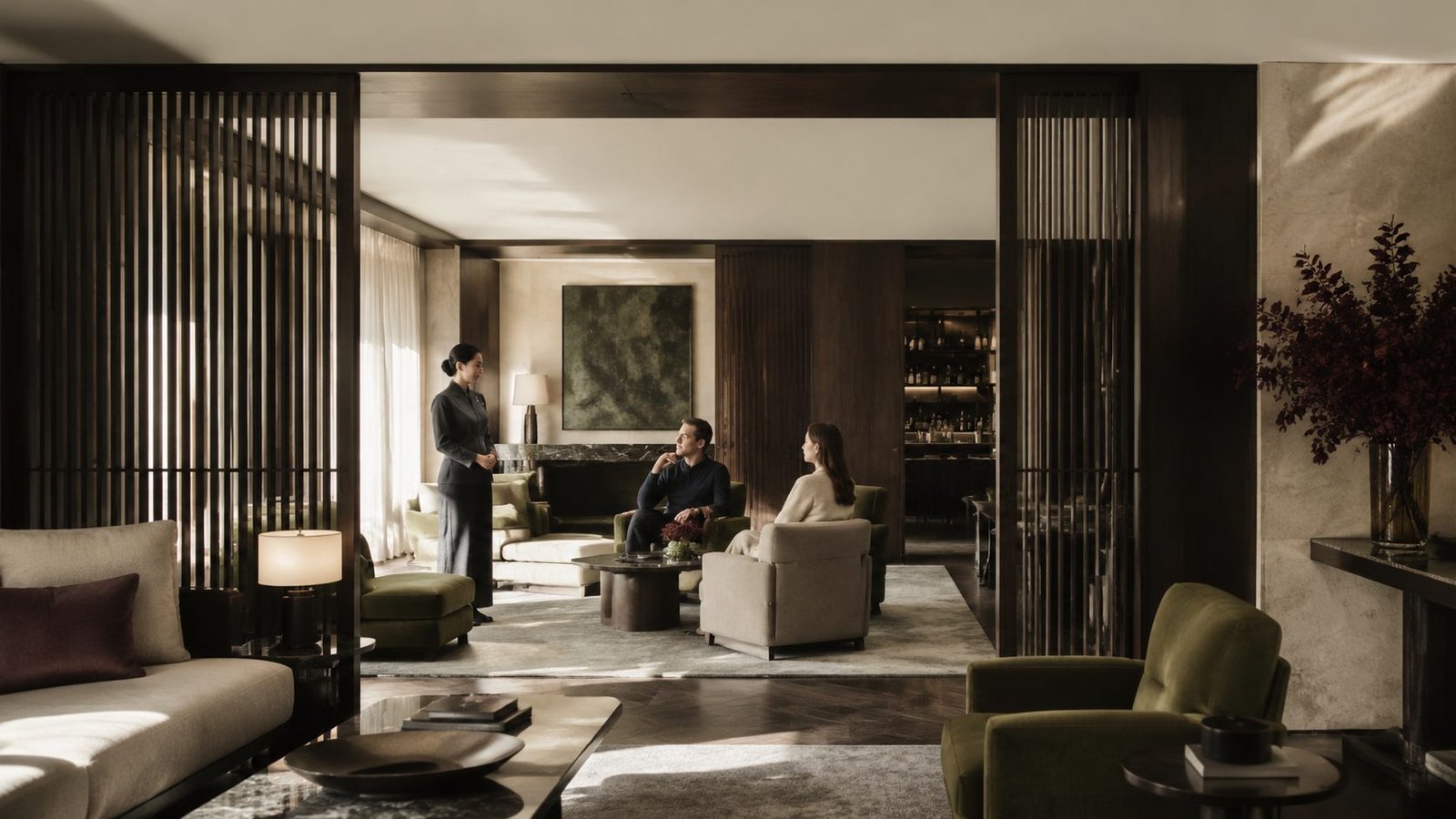
For most of the last two decades, the premium end of travel competed on addition. More inclusions, more channels, more square metres, longer buffets, larger spas, wider menus. Abundance was legible: it could be photographed, listed on a rate sheet and compared line by line against a competitor. It also had the commercial virtue of being easy to sell, because it required no explanation.
That logic is now working against the operators who invested most heavily in it. The guest paying the highest rates in a market is increasingly indifferent to how much is on offer and highly sensitive to whether the experience will hold. Will the restaurant have a table at the hour they want it. Will the pool be quiet at four in the afternoon. Will the check-in take four minutes or forty. Will the room they were shown be the room they receive. Abundance answers none of these questions. Control answers all of them.
This is not a preference shift dressed up as a trend. It is a repricing of risk. When a stay costs several thousand currency units and occupies a fixed and non-recoverable number of days, the guest is not buying a product; they are buying an outcome with a deadline. Uncertainty about that outcome has a cost, and the guest is willing to pay someone else to absorb it. That willingness is where premium rate now lives.
What guests are actually buying
Three things, in roughly this order of importance.
Time. The premium guest has money and no slack. Every friction point in a stay converts directly into lost value, and they know it. This is why airport transfers, priority access, pre-arrival ordering and single points of contact have moved from courtesy to expectation. The operators winning here are not faster; they are more predictable. A twenty-minute transfer that always takes twenty minutes outperforms a twelve-minute transfer that sometimes takes fifty.
Space. Not floor area — separation. The most reliable premium in resort and urban hospitality today is attached to the ability to be alone, or to be only among people you have implicitly agreed to be among. Cabanas, private dining rooms, reserved sections, adults-only zones, floor-restricted lounges and members' levels are all the same product sold at different price points: guaranteed low density.
Composition. The hardest of the three to talk about publicly and the most powerful commercially. Guests at the top of the market are paying to influence who else is present. Membership, referral, minimum stays, high entry pricing and curation of the guest mix are all mechanisms for doing this. Operators rarely describe it in these terms, but every private club, every application process and every invitation-only rate is an admission that the other guests are part of the product.
Abundance can be copied by a competitor in a season. Control has to be built into the operation, and that is exactly why it holds its price.
Why abundance stopped working
Abundance failed for a structural reason rather than a fashion one: it is trivially replicable. If a resort adds a fourth restaurant, its competitor adds a fifth. If one property includes premium spirits, the next includes premium spirits and a spa credit. Every addition is visible, which means every addition is copyable, which means no addition holds a premium for long. What began as differentiation became table stakes, and the cost stayed on the balance sheet after the pricing power left.
There is a second problem. Abundance and control are frequently in direct conflict. A property that maximises inclusions maximises usage, and usage produces density. The all-inclusive model in its original form is the clearest example: making everything free at the point of consumption guarantees queues at the restaurant, competition for loungers and unpredictable service levels at peak. The operator has, in effect, sold the guest a promise it structurally cannot keep at full occupancy.
This is why the most expensive inclusive resorts have quietly inverted the model. They reduce keys, cap covers, restrict access, introduce reservation systems and sell private use of shared assets. The headline promise is still inclusion. The actual product is scarcity, delivered inside a frame of generosity.
What this does to rate strategy
If control is the premium attribute, then density becomes a pricing variable rather than a capacity variable. That is a significant break with how most revenue management is structured. Conventional practice treats occupancy as something to maximise subject to rate; the control model treats occupancy as something to shape in order to protect rate. In practice this means accepting lower peak occupancy in exchange for a higher and more defensible average rate, and being able to prove that trade in the numbers before the board asks.
It also changes what a rate fence is. Historically fences were built around timing and flexibility: book earlier, stay longer, accept a non-refundable rate, pay less. Increasingly the fence is built around access: pay more, and the experience is guaranteed rather than probable. Guaranteed dining. Guaranteed cabana. Guaranteed arrival window. Guaranteed floor. These are not upgrades in the traditional sense — they do not add anything — they remove uncertainty, and guests pay for the removal.
Membership is the cleanest structural expression of this. A membership fee is a payment for standing access, which is a payment for certainty, collected before consumption and independent of occupancy. It solves three problems at once: it produces recurring revenue that behaves better in a downturn, it filters the guest mix, and it gives the operator a legitimate mechanism for limiting density. This is a large part of why membership models are moving from a hospitality curiosity to an underwriting consideration.
Occupancy stops being the objective and becomes an input. Very few revenue systems are built to think that way.
Where this gets difficult
Control is operationally expensive and it does not photograph. Abundance sells itself in a photograph; control has to be experienced or credibly promised, which puts enormous weight on reputation, referral and the consistency of delivery. A single failure is more damaging in a control-based product than in an abundance-based one, because the failure is the product. A guest who does not get the fifth restaurant is mildly disappointed. A guest who was guaranteed a quiet pool and found a crowded one has been sold something that did not exist.
There is also a labour dimension that the industry has been slow to price. Predictability at the top of the market depends on senior, experienced staff with the authority to solve problems without escalation. That is a more expensive service model than a larger number of junior staff performing scripted tasks, and it is being adopted at precisely the moment when experienced hospitality labour is hardest to recruit and retain. Any operator promising control without fixing this is promising something the organisation cannot deliver.
Finally, control has a distributional problem. Selling guaranteed low density inside a shared asset means some guests receive a materially better experience than others in the same building, and the gap is visible. Managed poorly, this reads as a two-tier product and damages the brand for everyone below the line. Managed well, the tiering is invisible to those not in it — which is itself a design discipline, not a pricing decision.
What to watch
Three indicators are worth tracking over the next twenty-four months. First, whether reservation and access systems become a standard part of the premium stay rather than a peak-season workaround — the infrastructure of control arriving as a norm. Second, whether lenders and investment committees begin to treat membership and access income as structurally different from transient room revenue, which would change what gets built. Third, whether key counts in new premium developments continue to fall relative to site area, which is the physical signature of an industry pricing space rather than volume.
The direction of travel is reasonably clear. The premium guest has stopped asking how much is included and started asking what is certain. The operators who can answer that question in writing, and then deliver it on a full Saturday in August, will hold their rate. The rest will spend the next decade adding things nobody is willing to pay for.
The Leisure Economy View
What this means for operators, investors, marketers and destinations.
{{ v.who }}
{{ v.text }}
Sources and methodology
This piece is an argument, not a measurement. It draws on operator conversations, published rate and occupancy patterns, development filings and observation across urban and resort markets. The chart is an illustrative model of the argument and is labelled as such; it is not derived from a dataset and should not be cited as one.
Where we cite figures elsewhere on this site, verified data carries a named source and date. Anything marked sample is illustrative and exists to show structure.
No sponsor, partner or commercial relationship influenced this piece. See our sponsorship disclosure.